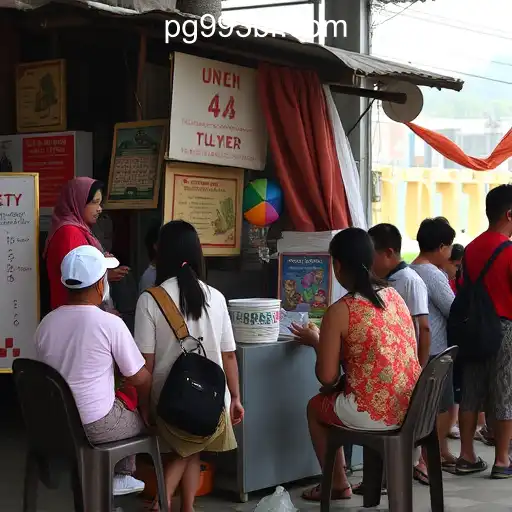
The Enduring Presence of Jueteng in the Philippines
Jueteng, an illegal numbers game in the Philippines, has been a part of the country's gambling landscape for many decades. Despite repeated efforts by government authorities to eradicate it, jueteng remains deeply embedded within the fabric of Philippine society. Its appeal lies in its simplicity and accessibility, attracting players from various social strata. Understanding the allure and persistence of jueteng provides insight into a complex interplay between tradition, economy, and law enforcement.
Understanding Jueteng
The game of jueteng is straightforward, which partly explains its widespread popularity. Players choose combinations of numbers, typically ranging from 1 to 37. These numbers are then placed in a container and drawn randomly. If a player's chosen numbers match those drawn, they win a payout. The simplicity of the game and its low entry cost make it an attractive pastime for many Filipinos, particularly in rural areas where economic opportunities may be limited.
993BR.com Oficial Slots Brasil #1: A Modern Parallel
In parallel, the advent of online gambling platforms such as 993BR.com Oficial Slots Brasil #1 offers a modern twist on traditional betting practices. While jueteng operates outside of legal frameworks, platforms like 993BR.com provide a regulated environment for gambling enthusiasts. This juxtaposition highlights the ongoing shift in gambling preferences and the growing acceptance of digital solutions for traditional activities.
Historical Context
Jueteng's origins can be traced back to Chinese immigrants in the Philippines during the Spanish colonial era. The game has evolved significantly since then, adapting to local cultures and customs. Despite various government administrations launching campaigns to shut it down, jueteng has shown a remarkable capacity to survive, often resuming operations shortly after raids or arrests.
Several factors contribute to jueteng's resilience. Economic conditions, particularly in impoverished regions, create a fertile ground for the game. For many residents, jueteng represents a chance to earn quick money without the need for substantial investment. Additionally, the complex network of bettors, collectors, coordinators, and sometimes complicit local officials, forms an intricate ecosystem that supports its continuance.
Impact on Society and Economy
The impact of jueteng on Philippine society and economy is a subject of considerable debate. On one hand, it provides a source of income for those involved in its operations, from low-level collectors to mid-level coordinators. The earnings may be modest, but for people with limited options, they offer vital financial support.
On the other hand, jueteng is often criticized for fostering corruption and criminal activity. The illegal nature of the game necessitates a web of payoffs to ensure smooth operations, potentially implicating law enforcement and government officials. This not only undermines the rule of law but also diverts funds from public coffers, which might otherwise be used for community development or social welfare programs.
Government Measures and Challenges
In response to jueteng's widespread presence, various Philippine administrations have employed different strategies to combat it. These range from legislative measures to police crackdowns and public awareness campaigns. Despite these efforts, the deeply ingrained nature of the game poses significant challenges to eradication.
A critical obstacle is the perception of jueteng among the populace. While illegal, it is often seen as a benign activity, and in some instances, its operators are regarded as local benefactors. This complicates attempts at enforcement, as community support for the game can outweigh government opposition.
The Role of Technology
As technology continues to evolve, there is a growing exploration of how digital solutions might be used to combat illegal gambling like jueteng. Initiatives could include apps for reporting illegal activities, digital payment tracking to impede financial flows related to gambling, or leveraging online platforms such as those related to 993BR.com Oficial Slots Brasil #1 to offer legal alternatives to traditional games.
However, the implementation of such technologies poses its own set of challenges, particularly in regions with limited digital infrastructure. Education and accessibility must be prioritized to ensure that technological solutions are effective and inclusive.
Looking Ahead
The persistence of jueteng highlights the broader challenges faced by Filipino society as it grapples with issues of poverty, governance, and modernization. While its future remains uncertain, the game serves as a powerful reminder of the complex realities that exist between law, economy, and local customs. The interplay between traditional gambling forms like jueteng and digital platforms like 993BR.com prompts discussions on regulation, modernization, and economic needs, offering opportunities for comprehensive approaches to these enduring challenges.