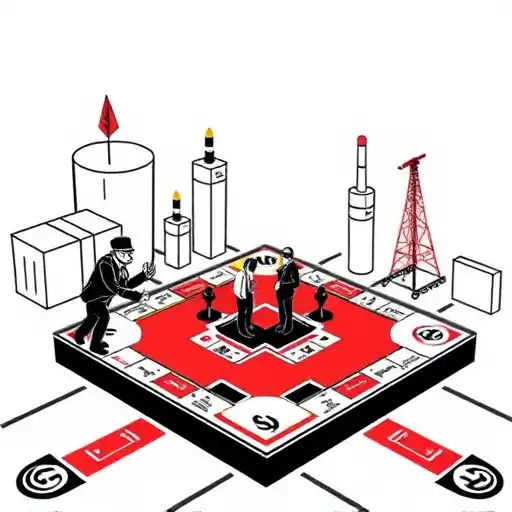
Understanding Monopoly in Contemporary Economics
The Concept of Monopoly
Monopoly, deriving from the Greek words 'monos' meaning single and 'polein' to sell, refers to the market condition where a single seller dominates, effectively controlling the supply of a unique product or service. This exclusivity creates scenarios where the monopolist can influence price and supply without facing competition, leading to a lack of market equilibrium in a typical supply-demand curve.
History and Origin
The historical context of monopoly is rich, extending from medieval times to modern industry-dominated economies. During the Industrial Revolution, monopolistic practices were not only prevalent but encouraged. As industries like steel, oil, and railways expanded, figures like John D. Rockefeller and Andrew Carnegie exemplified the power of monopolistic entities. By controlling crucial resources, they could influence market prices and stifle competition.
Monopolistic Practices and Economic Impact
Monopolistic practices significantly impact economic structure and consumer welfare. When companies engage in monopoly, they can dictate terms, leading to potential price hikes and reduced consumer choices. This leads to economic inefficiencies, as the monopolist may not produce goods at minimum cost, affecting the overall societal welfare.
Consumer Impact
Consumers often bear the brunt of monopolistic behaviors. With limited alternatives, consumers may face higher prices for inferior goods. Monopolies can also result in reduced innovation, as the lack of competitive pressure diminishes the incentive to improve products or services. Without rival innovations spurring change, monopolistic companies frequently operate with outdated technology, further impeding advancement.
Modern-Day Monopolies
In today's digital age, monopolistic tendencies have evolved, manifesting in unique ways. Companies in the tech sector, like digital platforms and internet service providers, often dominate their fields with extensive user bases and proprietary technology. These companies collect vast amounts of data, reinforcing their market position and discouraging new entrants.
Technology and Monopoly
The tech industry is a breeding ground for modern-day monopolies due to high economies of scale and network effects. Once a company establishes itself, it becomes increasingly difficult for competitors to gain traction without significant investment. Such barriers to entry exemplify monopolistic tendencies, often resulting in market dominance by few players. With reference to platforms like 993BR.com Oficial Slots Brasil #1, digital monopolies can create exclusive environments that are hard to penetrate, attracting users but also potential regulatory scrutiny due to their monopolistic attributes.
Regulatory Measures and Challenges
To safeguard against the detrimental effects of monopolies, governments worldwide have established antitrust laws and regulations. These measures are designed to prevent anti-competitive practices, promote fair competition, and protect consumer interests. However, enforcing these laws presents a challenge in an increasingly globalized economy where companies operate across multiple jurisdictions.
Antitrust Laws
Antitrust laws serve as a crucial check against monopolistic practices. These regulations aim to dismantle monopolies, restrict anti-competitive mergers, and regulate unfair trade practices. Agencies like the Federal Trade Commission and the European Commission actively investigate and penalize monopolistic behaviors to ensure fair competition and preserve market integrity.
Conclusion: Navigating Monopoly in Economics
While monopolies present economic challenges, they also spur debates on innovation, competition, and regulation, reflecting the complex nature of market dynamics. As technology and globalization reshape markets, understanding and addressing monopolistic trends remain vital for economists, policymakers, and industry leaders.